Showing posts with label tribal art exhibition. Show all posts

Wednesday, October 21, 2015

Art Berbère, Regards Sur Une Collection

Until November 1, Espace 251 Nord in Liege is featuring Art Berbère, regards sur une collection, an exhibition offering a unique opportunity to discover the rich Amazigh (Berber) patrimony through the exceptional Lucien Viola collection of antique weavings and clothing for ceremonial and daily use. For the first time in Europe, architectural elements and exceptional Berber ceilings from the 20th century will be featured as well. This installation allows for the discovery of some of the myths that surround and explain these North African masterworks, retracing the exact origins of each weaving.

Visit the Espace 251 Nord website.


Boy's cape, akhnif  -   Collection Lucien Viola -  Photo by Philippe De Formanoir


Tuesday, October 13, 2015

Interwoven: Native Californian Basketry Arts from the Missions Forward

Drawn primarily from mission collections, Interwoven presents over 50 baskets created by Native American Californians, including the world-renowned Chumash and Pomo weavers. With a focus on baskets made during the Mission era (1769-1830s) to the early 20th century, Interwoven includes functional baskets such as parching trays and cradleboards as well as baskets made exclusively for trade with Europeans, all demonstrating exemplary basketry arts. This remarkable collection represents numerous tribal traditions and reveals the complex artistic sensibilities, inventiveness and ingenuity of Native weavers working with natural materials. Baskets tell a remarkable story of cultural continuity and survival despite conquest, environmental interruptions, suppressive policies and huge population loss. The weavers’ knowledge of the environment and their exemplary artistry have been passed from generation to generation despite these historic and cultural intrusions.

Visit the USF website.


Photos courtesy of the University of San Francisco


Monday, October 12, 2015

Himalaya Tribal

Despite its rugged terrain, the Himalaya chain, which spreads over five countries (India, Pakistan, Nepal, Bhutan, and Tibet), is home to sixty-five million people. While the range’s massive size (more than 2,500 kilometers long) has been instrumental in preventing China and India from directly influencing one another, the “Roof of the World” is a place where internal interactions have developed and where both unique and hybrid cultures have sprung up because of migrations and the adaptation of regional traditions to local ecosystems. The little-known art of the Himalayan peoples reflects the diversity of the area particularly well. Himalaya Tribal, an exhibition in its final weeks at the Musée des Arts d’Afrique et d’Asie de Vichy, is a fine introduction to the creations of these peoples and features magnificent objects that tell the stories of origin myths, seasonal festivities, and funerary and magical rites. Highlights of the exhibition include a magnificent Bhairava mask from the Kathmandu Valley, a striking Magar shaman’s suit of armor, a protective figure from the Terai Valley, and a smiling Tibetan citipati mask.


Image courtesy of Musée des Arts d’Afrique et d’Asie de Vichy


Saturday, September 26, 2015

Diverging Streams: Eastern Nigerian Art at the Baltimore Museum of Art

A new gallery for thematic exhibitions of African art at the Baltimore Museum of Art debuts with the reopening of the Museum's collection galleries. Diverging Streams: Eastern Nigerian Art features nearly 20 headdresses, masks, and costumes from the eastern Nigerian region of Africa, demonstrating the exchange between the Igbo, Jukun, Igala, Ogoni, Boki, Idoma, Ibibio, and Ejagham artists who lived between the Benue and Cross rivers.

Visit the BMA website for more information.

Janiform head crest  -  Cross River, Nigeria  -  Early 20th century

Installation view at the BMA

Friday, September 25, 2015

Beneath the Surface: Life, Death and Gold in Ancient Panama

Beneath the Surface: Life, Death, and Gold in Ancient Panama, at the Penn Museum until November 1, 2015, explores the history of, archaeological evidence about, and new research perspectives on the Coclé people who lived from about 700 to 900 CE. Video footage from the original Sitio Conte excavation and more than 200 objects from the famous excavation provide an immersive experience in this installation. One massive burial, dubbed “Burial 11” by the excavators, yielded the most extraordinary materials from the excavation. Believed to be that of a paramount chief, it contained twenty-three individuals in three distinct layers, accompanied by a vast array of grave objects. A to-scale installation of the burial serves as the exhibition’s centerpiece and features many artifacts displayed in the actual positions in which they were found, as well as digital interactive stations that allow for further exploration.

View the exhibition's official website.


Wednesday, September 23, 2015

Homme Blanc/Homme Noir. Impressions d'Afrique

Fascination, repulsion, desire, and even mockery have long characterized the ways in which Africans and Westerners have perceived one another. The second exhibition devoted to African art at the Pierre Arnaud Foundation, Homme Blanc/Homme Noir, Impressions d’Afrique (White Man/Black Man, Impressions of Africa), on view until October 25, 2015, examines several centuries of exchange and misunderstanding through a selection of works created between the seventeenth and twentieth centuries by both African and European artists. The visions of Westerners such as Géricault, Vallotton, and even Man Ray are juxtaposed with those of anonymous Igbo, Baule, or Kongo sculptors. The works displayed are from public collections (the Musée du Louvre and the Musée Royal d’Afrique Central in Tervuren), as well as from private ones, most notably that of Alain Weill.

For an in-depth look at the exhibition, visit the Fondation Pierre Arnaud website.


Tuesday, September 22, 2015

Les Aztèques, peuple du Soleil

Developed in collaboration with the Mexican National Institute of Anthropology and History, the Pointe-à-Callière Museum of Archaeology and History of Montreal is presenting the story of one of Central America’s most fascinating civilizations with Les Aztèques, peuple du soleil (The Aztec, People of the Sun). The exhibition is comprehensive in its approach and explores subjects such as everyday life, agriculture, war, architecture, religion, human sacrifice, the worship of the gods and the sun, the calendar, and the well-known codices. Through a selection of 275 objects on loan from Mexican museums, the show’s overview of Aztec culture showcases some of the major artworks that comprise its patrimony. Prominent among these are two monumental terracotta sculptures from the Templo Mayor; a well-known vase that represents the rain god Tláloc; a rare wooden mask inlaid with turquoise, shell, and mother-of-pearl; and many other not-to-be-missed masterpieces.

Visit the PAC Musée website.


Monday, September 21, 2015

Gold of the Ancient Americas

On view now at the Walters Art Museum in Baltimore is Gold of the Ancient Americas, an exhibition showcasing more than 50 artifacts, including cast animal pendants, a hammered gold disc, beaded necklaces and nose ornaments made by the indigenous peoples of the ancient Americas from Peru to Panama. The exhibition explores the Walters’ collection of gold ornaments crafted in Central and South America between AD 500 and 1500, alongside gifts to the collection from several generous donors. A mix of art and science, the exhibition tells the story of ancient societies through their use of gold as a symbol of power, wealth, and privilege, and highlights the making of gold objects by ancient American goldsmiths before the Spanish conquest.

Visit the Walters Art Museum website.


Images courtesy of the Walters Art Museum


Wednesday, September 9, 2015

Dance of the Ancestors: Art from the Sepik of Papua New Guinea

In its last days at the Museum Rietberg in Zürich is Dance of the Ancestors: Art from the Sepik of Papua New Guinea, an exhibition focusing on the many tribes of the Sepik River in northern Papua New Guinea. Philippe Peltier of the Musée du Quai Branly and Markus Schindlbeck of the Berlin Ethnologisches Museum, the exhibition’s curators, have assembled 220 objects, all from European museums and for the most part collected prior to World War I, with the intention of making the show more than just an art exhibition, but a tribute to the wealth and diversity of these cultures, as well as a key for understanding their lifestyles and their complex social organization.

Visit the Museum Rietberg website.


Monday, August 31, 2015

Missionaries and Idols in Polynesia

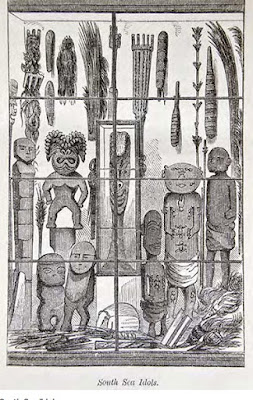
An exhibition currently on view at the Brunei Gallery of the School of Oriental and African Studies at the University of London documents the early years of the London Missionary Society (LMS), from its formation in 1795 until around 1825, the time of its initial “success” in central Polynesia, a triangle in the Pacific encompassing the Society Islands, the Cooks, and the Australs. The first half of the exhibition shows forty archival items—paintings, engravings, prints, books, imprints, and more —that together illustrate the formation of the LMS, the missionaries themselves, the voyage of the missionary ship Duff, and the society’s Missionary Museum in London. The second half of the exhibition, in the words of missionary Rev. John Williams, puts on view an “ocular demonstration” of forty idols and non-idol artifacts that the LMS missionaries collected and sent back to their headquarters.

Visit the official exhibition website.

Fly whisk handle  -  Rurutu, Austral Islands

Case of Polynesian idols depicted in Juvenile Missionary Magazine, 1860

Spear point-cum-feather god  -  Cook Islands

War god, Oro  -  Tahiti

Devils and Gods

Les diables et les dieux (Devils and Gods), currently on view at Château de Tanlay until September 20, creates a dialogue between contemporary art and traditional works from non-Western cultures. Without the imposition of any cultural hierarchy, the works of Bengt Lindström, Barthélémy Toguo, Coco Fronsac, and Cyprien Tokoudagba are installed side by side with some fifty pieces from traditional cultures of Africa, Oceania, and the Himalayas to form a compelling aesthetic conversation.

Visit the official Château de Tanlay website.


Tuesday, August 25, 2015

Sotheby's Preview Exhibition

Planned to coincide with the 2015 edition of Parcours des Mondes, Sotheby’s will present highlights of their upcoming December 2 tribal art auction in a preview exhibition at Galerie Charpentier on September 8–12. Some remarkable pieces from Cameroon and Oceania from the well-known René and Odette Delenne Collection will be among these treasures, as will a group of African works from the Frum Collection (Oceanic objects from which were sold by Sotheby’s with resounding success in September 2014). An Ndassa (Gabon) reliquary guardian figure collected before 1930 and which is from the same collection as the beautiful Kota Shamaye sold at the winter 2012 sale will also be on view.


Images courtesy of Sotheby's


Monday, August 24, 2015

Hughes Dubois. 35 ans de carrière photographique

As one of the many special exhibitions in this year's edition of Parcours des Mondes, Tribal Art Magazine will present Hughes Dubois. 35 ans de carrière photographique from September 8–13 at 22 rue Visconti in Paris. This installation celebrates the well-known photographer's three and a half decades in the field, showcasing his work with tribal material through some 186 Polaroids. The exhibition will also offer a look at a new project of Dubois's devoted to nighttime images of the majestic temple of Borobudur in Indonesia.

Hemba ancestor figure, D.R. Congo  -  Hughes Dubois

Tuesday, August 18, 2015

Tribal Art London 2015


The “tribal art season” is coming again to London. From September 2–5, the 2015 edition of Tribal Art London will be held at the Mall Galleries with nineteen international participants specialized in the non-European arts, including four new ones: Gallery Lemaire from Amsterdam and Handbury Tribal Art, Kenn MacKay, and Sabine & Anderson from the UK. Well-known Oceanic art dealer Wayne Heathcote will also return to the show this year.

For more information and to view the salon catalogue, visit the Tribal Art London website.


Wednesday, August 5, 2015

Insecta - Le royaume des insectes

Enter the strange universe of insects through Insecta - Le royaume des insectes, a temporary exhibition conceived and realized by the Royal Museums for Art and History and currently on view at the Royal Palace of Brussels. Insecta invites visitors to discover the many representations of insects in the world of art, literature and cinema, and to admire the treasures of Belgium's federal collections, revealing hundreds of works of art dating from prehistoric to modern times and hailing from Egypt to Belgium, Africa and Asia.  Open through September 6, 2015.

For more information, visit the exhibition's website.


Tuesday, July 28, 2015

L'Inca et le Conquistador

L’Inca et le conquistador (The Inca and the Conquistador), a new exhibition at the Musée du Quai Branly, uses artistic creations by the Inca and by the Spanish to tell both sides of the story of the conquest of Peru and to illustrate the confrontations that resulted from contact between two radically different worlds. Conceived by curator Paz Núnez-Regueiro, the exhibition focuses on two protagonists, the Inca sovereign Atahualpa and the Spanish conquistador Francisco Pizarro, whose interactions provoked a profound political, economic, cultural, and religious revolution in both of their empires. The paintings, weapons, textiles, gold objects, ceramics, maps, and engravings, mostly from the museum’s own collection, together tell this epic story and shed light on this mutual encounter with the “other.”

View the exhibition's official website.

Gold figurine  -  Inca, Peru  -  15th–16th century 
Portrait of Huayna Capac, Inca XII
Portrait of Atahualpa, Inca XIV
Male figure  -  Inca, Peru  -  15th–16th century


Monday, July 27, 2015

Fowler in Focus: The Art of Hair in Africa

The Fowler Museum at the University of California Los Angeles has opened a new exhibition presenting an array of finely sculpted combs and hairpins from Africa and its diasporas, along with the film Me Broni Ba/My White Baby by Ghanaian-American filmmaker Akosua Adoma Owusu. It explores the notions of ideal beauty and social status associated with hair among many African cultures. The juxtaposition of traditional hairpins and combs made from rare materials with an avant-garde contemporary film raises questions about constructions of identity in Africa from the colonial period to today.

View the official exhibition website.

Comb  -  Probably Djuka, Surinam  -  20th century

Comb  -  Asante, Ghana  -  ca 1900

Comb  -  Chokwe, D.R. Congo

Images courtesy of the Fowler Museum, UCLA


Wednesday, July 22, 2015

Arts du Nigeria révisites

Without aspiring to exhaustively detail the cultural production of Nigeria across its 2000-year history, the collection at the Musée Barbier-Mueller is very rich in several respects. Faithful to chronological continuity, it provides a sample of the production of the major cultural centers of Nigeria, shedding light on archaeological pieces from Nok, Katsina, and Sokoto, works from Ife and the kingdom of Benin, and Yoruba, Ijo, and Igbo objects, as well as items from the Cross River and the Benue Valley. By virtue of their rarity, certain pieces in the collection constitute “monuments” of African art. Others, by their emblematic force, are among its great “classics.” Arts du Nigeria révisites, on view through January 17, 2016, sets out to present these remarkable objects, highlighting their aesthetic qualities while explaining, by means of the exhibition's accompanying catalogue, the ethnographic context of their production and use.

To find out more, visit the official exhibition website.


Worship fan  -  Yoruba

Head depicting a woman  -  Ife

Helmet mask  -  Igbo

Head crest  -  Afo

Images courtesy of the Musée Barbier-Mueller


Tuesday, July 21, 2015

Shifting Patterns: Pacific Barkcloth Clothing

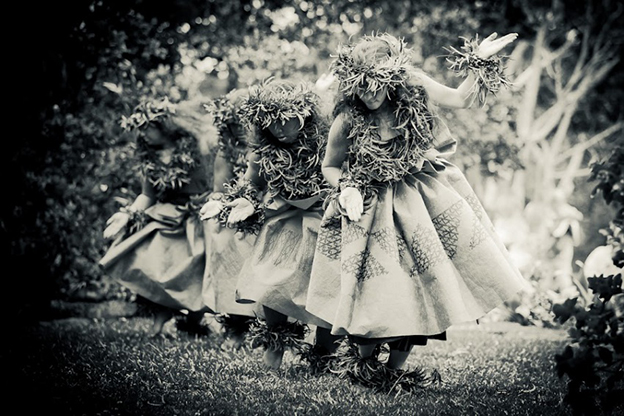
Shifting Patterns: Pacific Barkcloth Clothing, on view at the British Museum until August 16, 2015, features seventy-seven examples of clothing, headgear, masks, and ornaments from New Guinea to Easter Island, by way of Hawaii and New Zealand. The show’s curators place emphasis on the objects’ traditional social and cultural contexts but also examine how more recent developments associated with colonization have altered their forms and uses.


Hula dancers from the Hālau Nā Kipuʻupuʻu group, Kaʻauea, Hawaiʻi, Hawaiian Islands, 2011, Dino Morrow
Cloth  -  Hawaiian Islands

Tuesday, July 14, 2015

Le Monde Covers Parcours des Mondes 2015

This year's upcoming edition of Parcours des Mondes was the subject of a June article in Le Monde. Examining the growth and popularity of the event and the tribal art market at large, the piece featured Jacaranda amid a group of distinguished international tribal art dealers and led with a highlight of a gorgeous Tsonga headrest in our collection. 

"Quant aux prix glanés dans les différentes galeries, ils varient selon la rareté, la traçabilité, l’état de l’objet. Ainsi, Roger Bourahimou vend ses pièces « rares et atypiques d’Afrique centrale » entre 1 500 et 200 000 euros. Chez Dori et Daniel Rootenberg de la galerie Jacaranda, basée à New-York et spécialisée dans l'art d'Afrique du Sud, cet appui-tête tsonga est à 5 500 euros et ce rare knobkerrie (bâton) avec un conteneur de tabac à priser à 20 000 euros."


Headrest  -  Tsonga, South Africa  -  Late 19th or early 20th century