Showing posts with label british museum. Show all posts

Tuesday, July 21, 2015

Shifting Patterns: Pacific Barkcloth Clothing

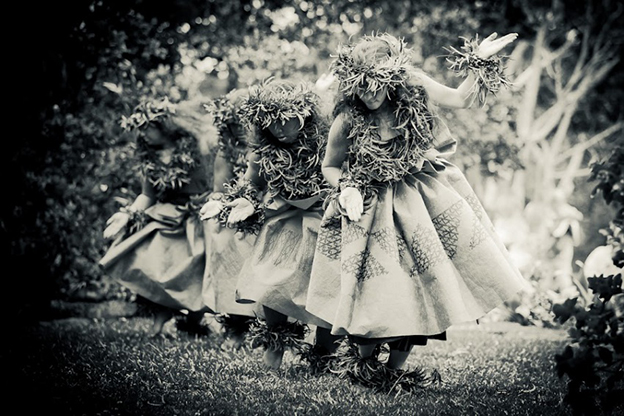
Shifting Patterns: Pacific Barkcloth Clothing, on view at the British Museum until August 16, 2015, features seventy-seven examples of clothing, headgear, masks, and ornaments from New Guinea to Easter Island, by way of Hawaii and New Zealand. The show’s curators place emphasis on the objects’ traditional social and cultural contexts but also examine how more recent developments associated with colonization have altered their forms and uses.


Hula dancers from the Hālau Nā Kipuʻupuʻu group, Kaʻauea, Hawaiʻi, Hawaiian Islands, 2011, Dino Morrow
Cloth  -  Hawaiian Islands

Monday, June 29, 2015

Indigenous Australia: Enduring Civilization

On view until August 2, 2015, the British Museum presents a major exhibition on Australian Aboriginal art, the first of its kind ever to be held in England. The colonization of Australia is closely associated with England, since it played a key role in the Western discovery and exploration of the “island continent” and, tragically, also in the decimation of its native cultures. Titled Indigenous Australia: Enduring Civilization, this exhibition offers a rare opportunity to see the museum’s remarkable collection of Australian art, the oldest pieces of which were brought to England as early as the 1770s. The exhibition will also feature works lent by a variety of other prestigious institutions such as the British Library, the Pitt-Rivers Museum, and the Cambridge Museum.

Learn more at the British Museum's official website.

Turtle shell mask  -  Mer, Torres Strait Islands 
Kunmanara Hogan, Tjaruwa Woods, Yarangka Thomas, Estelle Hogan,
Ngalpingka Simms and Myrtle Pennington, Kungkarangkalpa (detail), 2013

Images courtesy of the British Museum


Wednesday, April 22, 2015

Larrakitj : Aboriginal memorial poles by Wukun Wanambi

An installation by contemporary Aboriginal Australian artist Wukun Wanambi, on view now at The British Museum, addresses a series of important ideas about ancestral power, the significance of land and the search for meaning. Aboriginal Australian memorial poles – known as larrakitj – are hollow coffins created to hold the bones of the dead in secondary burial. Placed in groups on significant sites and painted with clan symbols, they are left to deteriorate with wind and weather. Contemporary artist Wukun Wanambi belongs to the Yolngu people of northern Arnhem Land and has worked innovatively with this longstanding art form for over a decade. Wukun’s work is an exploration into traditional forms with deep connections to clan, territory and ancestral stories.

Visit the exhibition's official website.

Wukun Wanambi  -  Wetjwitj (detail), 2013

Image courtesy of The British Museum


Thursday, December 19, 2013

Beyond Eldorado: Power and Gold in Ancient Colombia

From the Spanish Conquistadors to DreamWorks Studio’s animated heroes Tulio and Miguel, and by way of Voltaire’s Candide, many have dreamed of El Dorado. Whether a utopia or a myth, the legend of this lost city of gold rests on a fascinating reality that the British Museum’s most recent exhibition explores. Beyond El Dorado: Power and Gold in Ancient Colombia, on view through March 23, 2014, begins with the ritual that is the origin of the notion of El Dorado, which means “the golden one.” In this ritual, which was celebrated at Lake Guatavita, not far from what is now Bogota in Colombia, an individual who was contending for power was covered with gold dust, dove into the lake, and emerged as a chief of the Muisca people.

For more information on this exhibition, visit the official website.


Images and information courtesy of The British Museum


Saturday, March 30, 2013

Sowei Mask: Spirit of Sierra Leone

Sowei masks – unique to the region around Sierra Leone – are worn by senior members of the all-female Sande society during rite-of-passage ceremonies that signify a girl’s transition to adulthood. They are carved expressions of local ideals of feminine beauty, health and serenity that vary widely in their detail. [i]Sowei Mask: Spirit of Sierra Leone[/i], on view now at the British Museum, honors these marvelous creations with a showcase exhibition that explores their history and the development of their forms.

Visit the exhibition's official website.


Friday, March 22, 2013

Treasures of the World's Cultures

Entering its final weeks at the Art and Exhibition Hall of the Federal Republic of Germany in Boon is an exhibition that brings together more than 250 unique objects from the world-famous collections of the British Museum. Treasures of the World's Cultures - The Great Collections: The British Museum presents masterpieces from every part of the world and from every epoch, opening a window onto two million years of human culture and history and on the extraordinary wealth of the collections of the British Museum, built over the last 250 years.


Mask with nose ornament  -  Calima, Colombia  -  600–1500 CE

Seated figure of a Buddha  -  Burma (Myanmar)  -  18th century

Wedjat-eye amulet  -  Egypt  -   ca. 664–525 BCE

Information and images courtesy of the Kunst- und Austellungshalle der Bundesrepublik Deutschland


Wednesday, December 29, 2010

Benin Mask is Withdrawn from Sotheby's Auction After Online Protest


A rare £4.5 million West African ivory mask, believed to have been looted by the British during a 19th century invasion of Benin (in present-day Nigeria), was withdrawn from a Sotheby's sale slated for February. The withdrawal was in response to online protests regarding claims of cultural patrimony and demands for repatriation. 

The mask, one of the last great masterpieces of Benin sculpture remaining in private hands, is believed to have been worn by the "Oba" or king of Benin on ceremonial occasions. It depicts the head of the queen mother of the Edo peoples and has a refined and untouched surface, which has been well treated with palm oil. 

The protests were organized and led by the Nigeria Liberty Forum (NLF), an activist group of Nigerians and friends of Nigeria. The group describes themselves as "UK-based Nigerian pro-democracy group." The protests began last week on social networking sites and an online petition circulated by the group. Local government officials in Nigeria have publicly condemned the sale and criticized the current owners. 

"It is a shame that in this time and age individuals continue to plunder and abuse the culture and heritage of a defenseless people just because they can," NLF's letter to Sotheby's stated. "To this end we request that you withdraw the items from the sale forthwith as the true ownership is far from settled. We would also like to request that you go a step further and advise your clients to return these items back to the Nigerian people where they rightfully belong."

The mask was one of several items to be sold at Sotheby's in London by the descendants of Lt. Col. Sir Henry Gallwey, a vice consul of a British protectorate in Nigeria who took part in the 1897 invasion of Benin when the British deposed the king and burned and looted the city. They auctioned off much of the objects to pay for the offensive. Several pieces, including a mask similar to the one withdrawn from Sotheby's auction, were ultimately placed in the British Museum. 

Sotheby's official statement:

“The Benin Ivory Pendant Mask and other items consigned by the descendants of  Lionel Galway which Sotheby’s had announced for auction in February 2011 have been withdrawn from sale at the request of the consignors.” 

Monday, May 24, 2010

Sculpture Deemed Too Complex for Africa Could Be Real After All


Ever since a pure copper sculpture was found buried in a palm grove near the Nigerian city of Ife, experts from the West have argued that the artefact was a fake that was too sophisticated to have been created by African hands.

Found in 1910, the "Olokun head" left Western curators doubting that such a technically advanced work of art could have been created by indigenous people. Years later, they even began to doubt its authenticity, claiming that the original had been sold illegally and the one which remained in Nigeria was an ingenious copy. But now, new science is set to turn past wisdom on its head. There is a growing belief among contemporary curators that the "counterfeit" sculpture is the real thing, according to The Art Newspaper.

When it first travelled to the British Museum in 1948, it was exhibited as a copy; scholars claimed it was made from a blend of ancient materials that had been melted down, while the real work of art was thought to have been smuggled out of Africa by a European or American collector. The artwork, now on its second visit to the British Museum, where it is currently displayed again as a "replica" will undergo a thorough scientific investigation next month to establish the truth, once and for all.

Nigel Barley, a former British Museum curator who briefly examined the head in January, believes it may well be the original. Enid Schildkrout, from New York's Museum for African Art and curator of the current exhibition at the British Museum, agrees. If, she said, the real treasure had in fact been stolen, "it is surprising that the original has never reappeared".
It was first found by Leo Frobenius, a German anthropologist who had heard rumblings of a buried sculpture in a palm grove, just outside Ife, near a shrine dedicated to the goddess of the sea, Olokun. He organised a dig to investigate, and found the artwork.

Some days later, the colonial administration seized the sculpture on the grounds that it was sacred and should be returned to its original site, before it was transferred to the Ife Museum. One theory that emerged was that Frobenius commissioned a replica when he was instructed to hand over the artefact, and smuggled the original out of the country.

At the time of discovery, the head was considered too great a masterpiece to have been created by indigenous African artists a reflection of prevailing attitudes of the early 20th century. Some Europeans even theorised that the work was a remnant from the lost city of Atlantis. A spokeswoman for the British Museum said when the head travelled to the West, it caused a huge stir because "it flew in the face of Western perceptions" (of African heritage and cultural achievements).

It is now accepted by the curatorial community that the advanced artistic techniques used to create the sculpture were "more advanced than those of Renaissance Italy, and comparable to those of [the artist] Donatello".

Such sculptures, discovered in Nigeria and neighbouring Benin, were sold on the open market for under £100, in some instances, during the 1950s. This particular work was surrounded by various myths and beliefs, but it was not actually examined until 1948, when it left Nigeria and specialists at the British Museum declared it was a replica.

Since then, curators have cast doubt over the idea that Frobenius organised the deceit, not least because it is highly unlikely that such a complicated replica which was found to be made from authentically ancient materials could have been made in such a short space of time.

Source: www.archaeologydaily.com
Wednesday, March 3, 2010

Review of "Kindgom of Ife" from the Guardian

By Jonathan Jones:

This is an exceptional exhibition, even by the high standards the British Museum has established in recent years. It is extraordinary because it brings together such a large number of masterpieces that have rarely or never been exhibited outside Nigeria before – and when I say masterpieces, I mean artworks that rank with the Terracotta Army, the Parthenon or the mask of Tutankhamen as treasures of the human spirit.

For European artists a century ago, African sculpture was powerful precisely because it did not conform to the smooth idea of beauty that Picasso's generation had been brought up on – ideas that went back to classical Greece. But they had not seen the art of Ife, a medieval city-state that flourished from the 12th to 15th centuries in West Africa, trading across the Sahara with the Islamic Mediterranean world.

The superb sculpted heads in this exhibition – statues of sick people, monuments to warriors, royal heads whose strange vertical scars tell of the ceremonies of the court – were first rediscovered in quantity in an amazing find on a building site in the modern Nigerian city of Ife in 1938. This art was so different and unexpected, so "un-African", that one of its first students thought it must be the lost art of Atlantis.

But these works were not Greek, let alone from Atlantis. The faces that gaze coolly past you from these cases are challenging and formidable in their beauty. And they are disturbing to anyone who has any lingering belief in the uniqueness of European art. Sculptors in Ife imitated the human face as accurately and sensitively as any Greek, and matched the Greek feeling for harmony, balance and proportion.

What we see here is an African classical art – by which I mean an art with a strong concept of order that gives it a special authority, whether it comes from Athens, China or Ife. Like that of ancient Egypt, the art of Ife is perfect, remote, godlike and yet – as with Egypt – when you look again it is highly observational, rooted in the real life of this lost civilization.

Ife remains mysterious. The catalogue admits there's so much still to learn about this art and the world that created it. Hopefully this exhibition will be the starting point for new archaeology. It elicits awe. To behold these royal heads is to travel to a fabled realm far beyond your imagination, a place richer than Atlantis.

Tuesday, March 2, 2010

The Kingdom of Ife: Sculptures of West Africa at the British Museum

This major exhibition presents exquisite examples of brass, copper, stone and terracotta sculpture from West Africa.

The Kingdom of Ife (pronounced ee-feh) was a powerful, cosmopolitan and wealthy city-state in West Africa (in what is now modern south-west Nigeria).

Ife flourished as a political, spiritual, cultural and economic centre in the 12th–15th centuries AD, and was an influential hub of local and long-distance trade networks.

The exhibition features superb pieces of Ife sculpture, drawn almost entirely from the magnificent collections of the National Commission for Museums and Monuments, Nigeria.

The artists of Ife developed a refined and highly naturalistic sculptural tradition in stone, terracotta, brass and copper to create a style unlike anything in Africa at the time. The technical sophistication of the casting process is matched by the artworks’ enduring beauty.

The human figures portray a wide cross-section of Ife society and include images of youth and old age, health and disease, suffering and serenity.

The exhibition will run from March 4th through June 6th, 2010. For more information and to watch an video about the exhibit visit: http://www.britishmuseum.org/whats_on/future_exhibitions/kingdom_of_ife.aspx.

Tomorrow, we will include a review of the exhibit that was featured in the UK's Guardian.

Friday, January 29, 2010

West African Art at the British Museum

Starting in the beginning of March, the British Museum will host “Kingdom of Ife: Sculptures from West Africa.” According to the museum, this major exhibition resents examples of brass, copper, stone and terracotta sculpture from West Africa.

The Kingdom of Ife (pronounced ee-feh) was a powerful, cosmopolitan and wealthy city-state in West Africa (in what is now modern southwest Nigeria).

Ife flourished as a political, spiritual, cultural and economic centre in the 12th–15th centuries AD, and was an influential hub of local and long-distance trade networks.

The exhibition features pieces of Ife sculpture, drawn almost entirely from the magnificent collections of the National Commission for Museums and Monuments, Nigeria.

The artists of Ife developed a refined and highly naturalistic sculptural tradition in stone, terracotta, brass and copper to create a style unlike anything in Africa at the time. The technical sophistication of the casting process is matched by the artworks’ enduring beauty.


The human figures portray a wide cross-section of Ife society and include images of youth and old age, health and disease, suffering and serenity.

The exhibit will run through the beginning of June.